5 Foods That May Affect Thyroid Health and What to Eat Instead
A Functional Nutritionist does everything a Functional Medicine Practitioner does, but takes it to a whole new level by incorporating “Restorative Medicine.” This is holistic approach to health by incorporating food, sleep, stress, fitness, and toxic environmental factors, in the effort to reduce the risk of chronic disease.Functional Nutritionists use a systems-oriented approach by reviewing behaviors that may contribute to long-term health problems. By looking at all of these components, the functional nutritionist can use science, clinical expertise, and nutrition tools to encourage behavior modification and change to correct the root cause of the illness.
Functional Nutritionist Academy offers a fast track on-boarding step-by-step state of the art approach to becoming a Board Certified Functional Nutritionist.
For information go to : https://functionalnutritionistacademy.com
They provide an online board certification program accredited and recognized by the American Association of Drugless Practitioners (AADP) certification No. 17204112 and the International Certification and Accreditation Board.
The course also offers continuing education units (CEU’s) for Acupuncturists, Chiropracters and Naturopaths.
About the Author
Think of the word “restorative”. A Functional Nutritionist seeks to restore peak performance of all systems of the body using a holistic approach to health by restoring proper gut function; eliminating dysbiosis, poor digestion, addressing Leaky Gut, SIBO, Candida or other infections as well as Biofilms. Functional Nutritionists recognize that certain foods can disrupt gut function and cause inflammation; therefore, they incorporate “Therapeutic Diets”, and seek to reduce inflammation which can cause many illnesses.
They improve sleep hygiene, stress management, fitness, and reduce toxic environmental factors, all in an effort to reduce the risk of chronic disease. They balance hormones with natural approaches, reducing the risk of cancer. Hormones include thyroid, adrenal, and endocrine (sex) hormones. They improve brain function through diet and lifestyle changes. They use epigenetics and genetic testing to avoid triggering gene expression, so their client will know what foods to avoid, or which are best , what medicines may be harmful, what nutritional supplements will help, what exercises are best incorporated all based on their genes.
Functional Nutritionist use a systems –oriented approach while recognizing the web-like connections between systems and reviewing behaviors that may contribute to long-term health problems. By looking at all of these components, the Functional Nutritionist can use science, Functional laboratory Tests, clinical expertise, and nutrition tools to bring back proper function of all systems of the body to peak performance, encourage behavior modification and change to correct the root (underlying) cause of the illness, which often has a root in poor diet, the wrong diet and poor lifestyle choices.
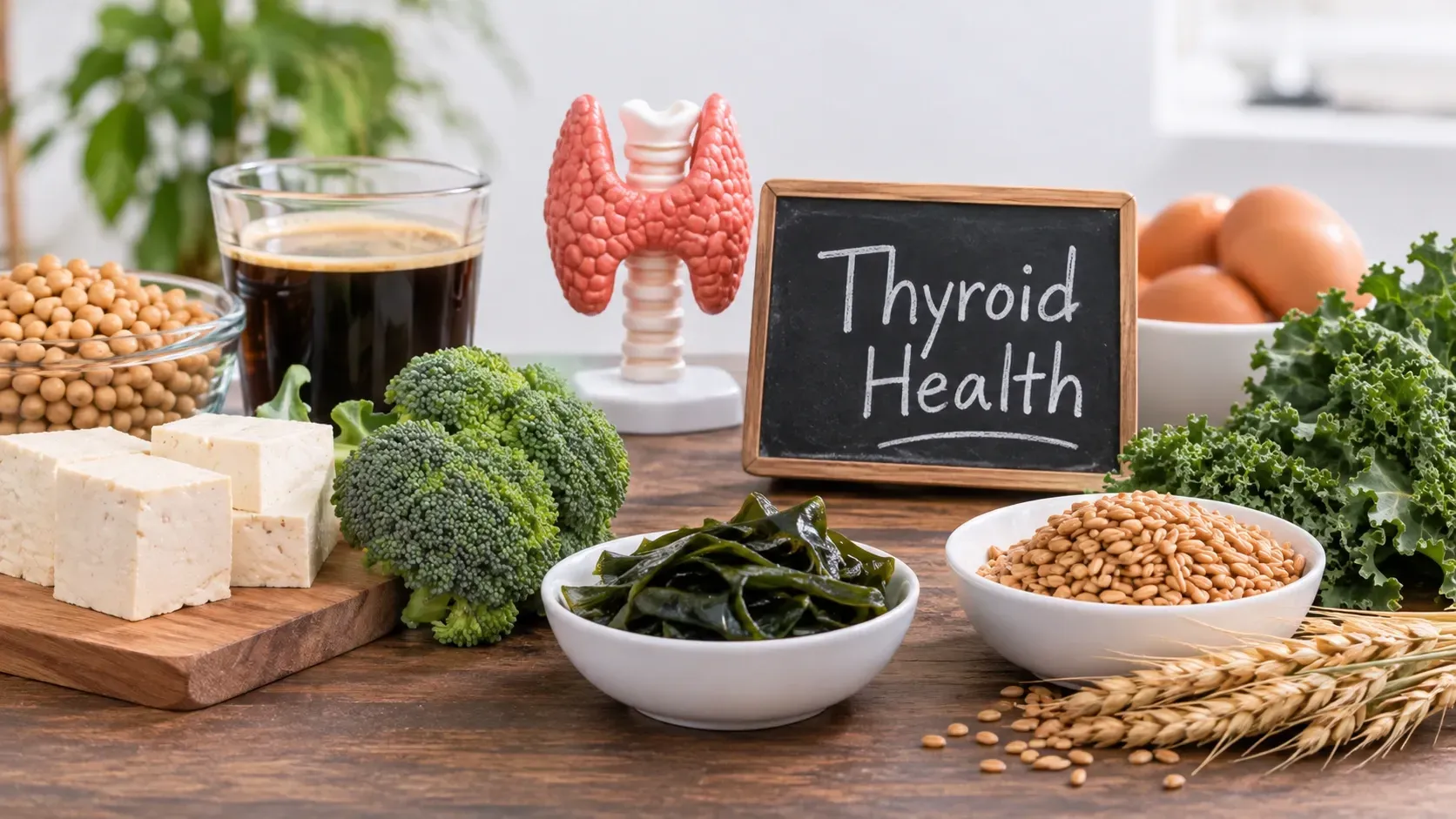
Table of Contents
- Introduction
- Most Thyroid Food Advice Is About Timing
- Soy and Thyroid Medication Absorption
- Cruciferous Vegetables Are Not the Thyroid Enemy
- Coffee, Calcium and Iron Around Your Dose
- Highly Processed Foods and the Bigger Picture
- What to Eat Instead
- Conclusion
- Ask Us Before You Cut Anything Out
- Health and Supplement Disclaimer
- Frequently Asked Questions
Key Takeaways
- Two different claims get muddled: affecting the thyroid, and affecting medication.
- Almost all the well-documented interactions are the second kind.
- Cooking substantially reduces the goitrogen compounds people worry about.
- Doing it the same way every day matters more than any single separation.
- Cutting vegetables on the basis of a headline is usually a bad trade.
Introduction
Most lists of foods that affect thyroid health overstate the case, because the genuinely well-documented interactions are about when you eat something relative to thyroid medication rather than whether you eat it at all, which is a question for your prescriber and part of why nutrition planning should start with what to add rather than what to remove.
That distinction changes almost everything about this topic, so it is worth getting straight before the list starts.
Most Thyroid Food Advice Is About Timing
Two very different claims get mixed together, constantly, usually in the same paragraph.
Claim one: this food affects thyroid function. Mostly weak, heavily dose-dependent, and largely irrelevant at the amounts people actually eat, particularly where iodine intake is adequate.
Claim two: this food affects how well thyroid medication is absorbed. Real, well documented, and clinically meaningful. It is also a timing problem rather than an avoidance problem.
Nearly all the useful advice falls into the second category. Nearly all the alarming advice is written as though it were the first.
Why the difference matters beyond pedantry: eliminating foods you did not need to eliminate has a cost. It narrows your diet, which can reduce exactly the nutrients the thyroid depends on. It makes eating socially harder. And for some people it feeds a pattern of anxiety around food that is far harder to undo than a thyroid number is to adjust. If you have any history of disordered eating, restriction advice from the internet is worth discussing with a provider before acting on it.
Soy and Thyroid Medication Absorption
Soy has a worse reputation than the evidence supports, and the part that is real is not the part people worry about.
The real issue is absorption. Soy products can interfere with the uptake of thyroid medication, which matters because that medication is dosed precisely and checked against blood tests.
The weaker claim is that soy suppresses thyroid function directly. That effect is much more marginal than its reputation suggests in people whose iodine intake is adequate, which describes most people eating a varied diet in the US.
So the practical answer is not "stop eating soy." It is to know that soy is one of the things worth raising with your prescriber when you talk about timing, and then to be consistent about whatever you agree. Which is the theme of this entire article.
Cruciferous Vegetables Are Not the Thyroid Enemy
This is the one worth pushing back on hardest, because the advice circulating does real harm.
The underlying fact: cruciferous vegetables, broccoli, cabbage, kale, cauliflower and Brussels sprouts, contain compounds that can interfere with iodine uptake. That is true, and it is the origin of every "avoid these vegetables" headline.
What those headlines leave out:
- The effect is dose-dependent, and relevant at intakes well beyond how people normally eat
- It matters most where iodine intake is already low, which is not the typical situation here
- Cooking substantially reduces the compounds involved, and most people cook these vegetables
Our position: cruciferous vegetables are among the most nutritionally valuable foods available, and cutting them out on the strength of a goitrogen headline is usually a bad trade. You would be giving up fiber, vitamin C, folate and a long list of other things to avoid an effect that, at dinner-sized portions of cooked broccoli, is not the problem you were sold.
A very large daily quantity of raw kale is a different conversation from broccoli with dinner. If your intake genuinely is at the extreme end, that is worth mentioning at an appointment. For everyone else, eat the vegetables.
Coffee, Calcium and Iron Around Your Dose
The best-documented group, and all of it is absorption rather than thyroid function.
- Coffee taken close to a thyroid medication dose can reduce how much is absorbed
- Calcium supplements, and calcium-fortified foods and drinks, likewise
- Iron supplements, likewise
The pattern is proximity in time. None of these is a food to give up, and all of them are things to be deliberate about.
Here is the part that gets missed, and it is the single most useful idea in this article. Consistency matters as much as separation. Your medication dose was adjusted against blood tests taken while you were living your normal routine. If that routine included coffee at a certain interval, the dose accounts for it. The problem is not coffee. The problem is doing it differently every day, because then the amount absorbed varies and the number the dose was set against stops meaning anything.
So pick a routine with your prescriber and keep it. We are not publishing separation intervals, because the right one depends on the medication and on what you are separating it from, and that is a prescriber and pharmacist question.
Highly Processed Foods and the Bigger Picture
Being honest about this one, since it appears on every list.
There is no special thyroid mechanism here, and anyone telling you that processed food directly damages your thyroid is overreaching. If an article offers that as its fifth item without explaining why, it is padding a list.
What is defensible is more ordinary. A diet weighted heavily toward ultra-processed foods tends to be lower in the micronutrients that thyroid physiology actually uses, selenium, zinc and iodine among them, simply because those nutrients come from foods that get displaced. It also tends to come packaged with other things that affect how you feel day to day, which matters when you are trying to work out whether a symptom is thyroid-related at all.
So it belongs on the list for the same reason it belongs on most lists, not for a thyroid-specific one. That is a less dramatic claim, and it is the accurate one.
What to Eat Instead
Framed as addition, which is both more useful and more sustainable than subtraction.
- A varied diet covering the relevant nutrients: seafood, eggs, dairy or fortified alternatives, nuts and seeds, lean protein
- Iodized salt, where you use salt at all. It is the quiet reason iodine deficiency is uncommon in the US, and it is worth knowing that many specialty salts are not iodized
- Cooked cruciferous vegetables, regularly, without anxiety
- Enough protein and fiber generally, because the baseline diet does more work than any single item on a list
- A consistent routine around medication timing, agreed with your prescriber
If you want to know whether your own pattern actually covers the raw materials, that is a measurable question rather than a guessable one. Thyroid panels and nutrient markers give you something concrete, and reviewing them with someone who knows your history is what turns numbers into a plan. It is also a better starting point than the kind of short restrictive reset that promises to fix things in a week.
Conclusion
Before you cut any of the foods that affect thyroid health from your diet, ask which of the two claims you are actually responding to. If it is about medication absorption, the fix is a conversation about timing and then doing it the same way every day, not a ban. If it is about thyroid function, look closely at whether the effect holds at the amounts you genuinely eat. In most cases the useful change is not a food you stop eating. It is a routine you stop varying.
Ask Us Before You Cut Anything Out
If you are trying to work out whether your diet covers what your thyroid actually uses, that is a measurable question rather than a guessable one, and a far better starting point than an elimination list. Complete Health Institute offers functional laboratory testing including thyroid panels, arranged alongside a consultation so results are read against your history. Dr. Teresa Rispoli holds a Doctor of Clinical Nutrition (DCN) and is a licensed acupuncturist (L.Ac.), with 30 years in functional medicine and nutrition, and offers a one-hour virtual functional nutrition consultation.
Our position is that diet changes usually come first and supplements may be suggested when food alone does not cover a need. We are at 28247 Agoura Rd in Agoura Hills, serving Thousand Oaks, Westlake Village, Calabasas, Woodland Hills, Malibu, Newbury Park and Moorpark, with virtual consultations available more widely. Call (818) 707-3126 or get in touch. This is an informational starting point, not a diagnosis, and not a recommendation or guarantee of a specific outcome.
Health and Supplement Disclaimer
This article is for general information only and is not medical advice. It is not intended to diagnose, treat, cure or prevent any disease. Statements about dietary supplements have not been evaluated by the Food and Drug Administration. Thyroid conditions require diagnosis and management by a qualified healthcare provider. Do not start, stop or change any medication, including thyroid medication, or make significant dietary changes, without speaking to the clinician who manages your care. If you are pregnant, breastfeeding, taking prescription medication, managing a diagnosed condition, or have any history of disordered eating, speak to your provider before making changes.
Frequently Asked Questions
What foods should I avoid with a thyroid condition?
Fewer than most lists suggest. The well-documented interactions involve medication absorption rather than thyroid function, so the practical answer is usually consistent timing agreed with your prescriber rather than avoiding foods.
Is broccoli bad for your thyroid?
Not at normal amounts. Cruciferous vegetables contain compounds that can interfere with iodine uptake, but the effect is dose-dependent, matters most where iodine is already low, and is substantially reduced by cooking.
Does coffee affect thyroid medication?
It can reduce absorption when taken close to a dose. Consistency matters as much as separation, since your dose was adjusted against blood tests taken during your normal routine. Ask your prescriber about timing.
Should I stop eating soy if I have a thyroid problem?
Generally no. Soy can interfere with thyroid medication absorption, which is a timing question. The claim that soy suppresses thyroid function directly is much weaker where iodine intake is adequate.
Do processed foods damage the thyroid?
There is no specific thyroid mechanism. A diet heavy in ultra-processed food tends to be lower in nutrients thyroid physiology uses, such as selenium, zinc and iodine, which is an ordinary nutrition point rather than a thyroid one.