What Causes Thinning Skin? Causes, Treatment & Prevention
A Functional Nutritionist does everything a Functional Medicine Practitioner does, but takes it to a whole new level by incorporating “Restorative Medicine.” This is holistic approach to health by incorporating food, sleep, stress, fitness, and toxic environmental factors, in the effort to reduce the risk of chronic disease.Functional Nutritionists use a systems-oriented approach by reviewing behaviors that may contribute to long-term health problems. By looking at all of these components, the functional nutritionist can use science, clinical expertise, and nutrition tools to encourage behavior modification and change to correct the root cause of the illness.
Functional Nutritionist Academy offers a fast track on-boarding step-by-step state of the art approach to becoming a Board Certified Functional Nutritionist.
For information go to : https://functionalnutritionistacademy.com
They provide an online board certification program accredited and recognized by the American Association of Drugless Practitioners (AADP) certification No. 17204112 and the International Certification and Accreditation Board.
The course also offers continuing education units (CEU’s) for Acupuncturists, Chiropracters and Naturopaths.
About the Author
Think of the word “restorative”. A Functional Nutritionist seeks to restore peak performance of all systems of the body using a holistic approach to health by restoring proper gut function; eliminating dysbiosis, poor digestion, addressing Leaky Gut, SIBO, Candida or other infections as well as Biofilms. Functional Nutritionists recognize that certain foods can disrupt gut function and cause inflammation; therefore, they incorporate “Therapeutic Diets”, and seek to reduce inflammation which can cause many illnesses.
They improve sleep hygiene, stress management, fitness, and reduce toxic environmental factors, all in an effort to reduce the risk of chronic disease. They balance hormones with natural approaches, reducing the risk of cancer. Hormones include thyroid, adrenal, and endocrine (sex) hormones. They improve brain function through diet and lifestyle changes. They use epigenetics and genetic testing to avoid triggering gene expression, so their client will know what foods to avoid, or which are best , what medicines may be harmful, what nutritional supplements will help, what exercises are best incorporated all based on their genes.
Functional Nutritionist use a systems –oriented approach while recognizing the web-like connections between systems and reviewing behaviors that may contribute to long-term health problems. By looking at all of these components, the Functional Nutritionist can use science, Functional laboratory Tests, clinical expertise, and nutrition tools to bring back proper function of all systems of the body to peak performance, encourage behavior modification and change to correct the root (underlying) cause of the illness, which often has a root in poor diet, the wrong diet and poor lifestyle choices.
Key Takeaways
- Thinning skin is most often caused by natural aging, sun exposure, and hormonal changes such as those during menopause.
- Long-term use of certain medications, especially corticosteroids, can also thin the skin over time.
- Thin skin bruises and tears more easily, which raises the risk of injury, especially in older adults.
- Prevention focuses on sun protection, gentle skin care, and supporting the skin's natural structure through diet and lifestyle.
- There is no cure that fully reverses skin thinning, though some approaches may support skin health and reduce further damage.
Table of Contents
- What Causes Thinning Skin
- Why Skin Becomes Thinner With Age
- Hormonal Changes and Skin Thickness
- Other Common Causes
- Signs of Thinning Skin
- Risks Associated With Thin Skin
- Prevention and Skin Care Approaches
- Is There a Cure for Thinning Skin
- When to See a Healthcare Provider
- Conclusion
- Frequently Asked Questions
Introduction
Thinning skin is caused mainly by aging, sun exposure, and hormonal changes, along with factors like certain medications and genetics. For women in Agoura Hills and beyond, especially those going through menopause, this is a common concern because skin naturally loses collagen and elasticity over time, and estrogen decline speeds up the process.
Understanding why skin thins helps separate normal aging from changes that might need medical attention.
It also puts realistic prevention and skin care choices into context, rather than relying on products or claims that promise more than skin biology allows.
What Causes Thinning Skin
Skin is made up of several layers, and the middle layer, called the dermis, contains collagen and elastin. These proteins give skin its thickness and ability to bounce back after stretching.
As collagen and elastin production slows down, the dermis becomes thinner. This is a gradual process influenced by age, genetics, environment, and hormones, rather than a single cause.
Why Skin Becomes Thinner With Age
Collagen production naturally decreases as people get older. Research suggests collagen levels drop by about one percent per year after the mid-twenties, though this varies by individual.
Skin also loses some of its ability to retain moisture with age. Combined with reduced collagen, this leads to skin that looks and feels thinner, especially on the hands, arms, and lower legs.
Sun Exposure and Photoaging
Ultraviolet (UV) light breaks down collagen and elastin fibers over time. This process, called photoaging, is one of the most significant preventable contributors to thinning skin.
Years of sun exposure without protection can cause skin to thin faster than genetics alone would predict. This is why sun-exposed areas, like the face, neck, and forearms, often show more visible thinning than areas that are usually covered.
Hormonal Changes and Skin Thickness
Estrogen plays a role in collagen production and skin hydration. During perimenopause and menopause, declining estrogen levels are associated with a measurable drop in skin collagen.
Some studies suggest women can lose up to thirty percent of their skin collagen in the first five years after menopause begins. This is one reason many women notice skin changes accelerating during this life stage, separate from ordinary aging.
Other Common Causes
Several other factors can contribute to thinning skin, sometimes independently of age or hormones.
- Long-term use of topical or oral corticosteroids, which can thin skin as a known side effect
- Smoking, which reduces blood flow to the skin and accelerates collagen breakdown
- Certain medical conditions, including some autoimmune and connective tissue disorders
- Nutritional factors, such as low protein or vitamin C intake, since vitamin C is needed for collagen synthesis
- Genetics, which influence baseline skin thickness and how quickly it changes over time
Signs of Thinning Skin
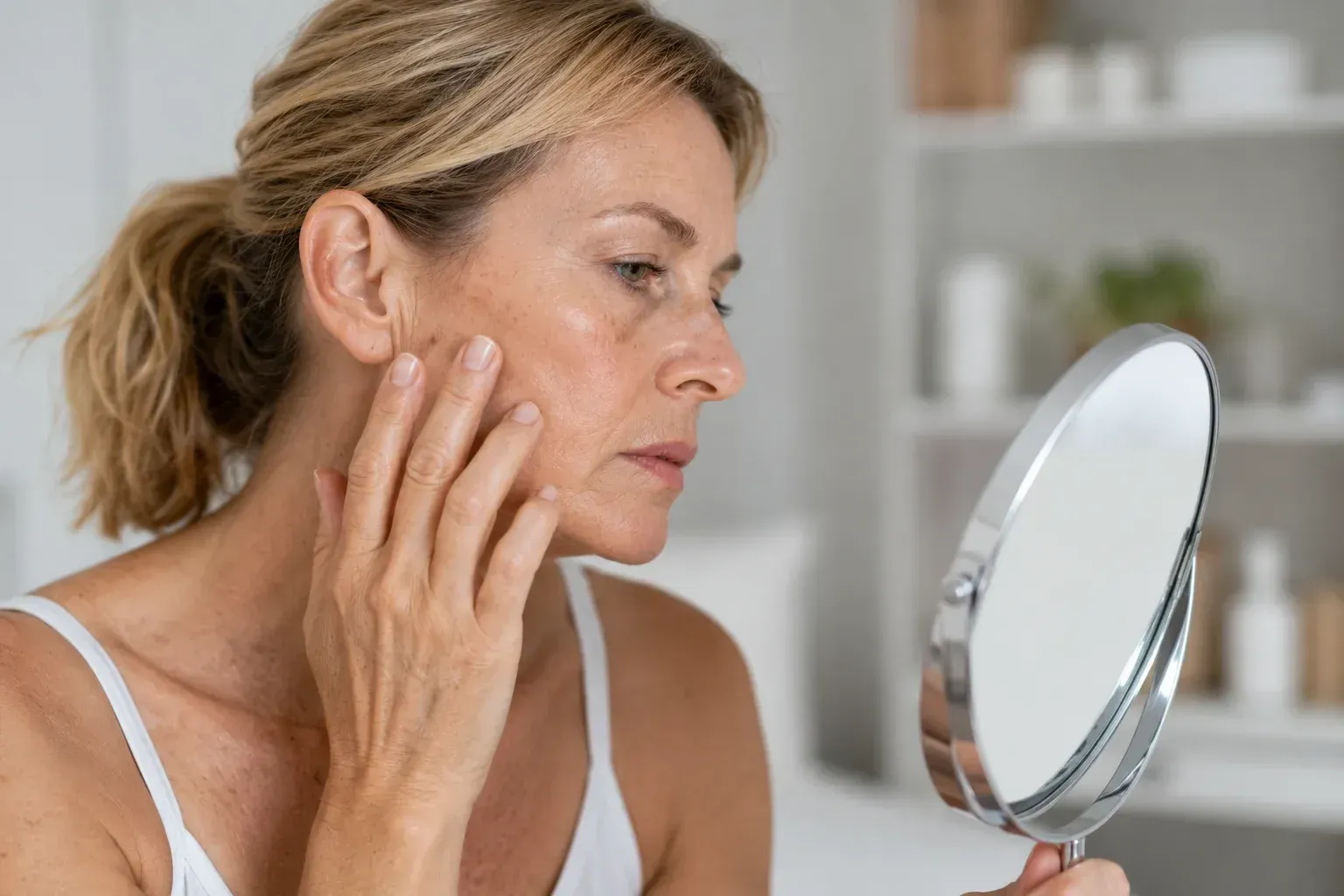
Thin skin often looks more translucent, and blood vessels underneath may become more visible. It can also feel more fragile to the touch.
Common signs include easy bruising, slower wound healing, and skin that tears from minor bumps or friction. These signs tend to become more noticeable with age, particularly on the arms and hands.
Risks Associated With Thin Skin
Thin skin is more vulnerable to injury than thicker, younger skin. Even a minor bump against furniture can cause a bruise or a skin tear in someone with significantly thinned skin.
For older adults, this raises practical concerns, since skin tears can take longer to heal and may become more prone to infection if not cared for properly. This is one reason thinning skin is not just a cosmetic issue for many women, particularly later in life.
Prevention and Skin Care Approaches
There is no way to stop skin from thinning entirely, since aging and hormonal changes are natural processes. However, certain habits may help support skin health and reduce additional damage.
Sun Protection
Daily use of broad-spectrum sunscreen is commonly recommended to reduce UV-related collagen breakdown. This is considered one of the most consistent, evidence-supported prevention steps available.
Gentle Skin Care
Harsh scrubbing, hot water, and strong exfoliants can further stress already thin skin. Gentle cleansers and consistent moisturizing are generally better tolerated.
Skin Care Ingredients Worth Understanding
Some ingredients are commonly discussed in relation to skin structure and hydration. For example, some women use a vitamin C serum as part of a broader skin care routine, since vitamin C is involved in collagen production. Retinoid-based products, such as a retinol creme, are also frequently discussed for their role in skin turnover, though individual results and tolerance vary.
Nutrition and Collagen Support
Since collagen is a protein, adequate dietary protein is often mentioned in discussions of skin health. Some people also consider a collagen powder as part of their diet, though research on oral collagen supplementation is still developing and results are not guaranteed or consistent across studies.
Protecting Skin From Injury
Wearing long sleeves, using padding on furniture edges, and being mindful of movement in tight spaces can reduce the chance of skin tears for those with noticeably thin skin.
Is There a Cure for Thinning Skin
There is currently no cure that fully reverses thinning skin once it has developed. Aging-related and hormone-related skin changes are part of a natural biological process, not a condition with a single fix.
Some approaches, including certain skin care ingredients, in-office procedures, and lifestyle changes, are studied for their potential to support skin appearance and function. None of these are guaranteed to restore skin to its earlier thickness, and outcomes vary by individual.
When to See a Healthcare Provider
Thinning skin on its own is often a normal part of aging, but certain signs warrant medical attention. These include skin that tears easily with minimal contact, wounds that heal very slowly, or unexplained, frequent bruising.
A skin health evaluation with a qualified provider can help determine whether thinning skin is related to typical aging, hormonal changes, medication use, or an underlying condition that needs separate attention.
Conclusion
Thinning skin is a common and largely natural part of aging, driven by declining collagen, sun exposure over time, and hormonal shifts such as those during menopause. Other factors, including certain medications, smoking, and nutrition, can also play a role.
While there is no guaranteed way to reverse thinning skin, understanding its causes helps set realistic expectations for prevention and care. Sun protection, gentle skin care, and attention to overall health are commonly discussed strategies, though individual needs and results differ.
If you're noticing changes in your skin and want a clearer understanding of what might be contributing to it, speaking with a qualified provider can offer more personalized context than general information alone. This kind of conversation is meant to support informed decisions, not to pressure you into any particular treatment or product.
Frequently Asked Questions
Is thinning skin always related to aging?
Not always. While aging is the most common cause, thinning skin can also result from sun exposure, certain medications, hormonal changes, or underlying medical conditions.
Can thinning skin be reversed?
There is no treatment known to fully reverse thinning skin. Some approaches may support skin health, but they do not restore skin to its earlier thickness.
Does menopause cause skin to thin faster?
Declining estrogen during menopause is associated with reduced collagen production, which can contribute to faster skin thinning during this life stage compared to earlier years.
Are over-the-counter creams effective for thinning skin?
Some ingredients, such as vitamin C and retinoids, are commonly studied for their role in skin structure and turnover, but individual results vary and they do not reverse thinning skin.
Is thin skin dangerous?
Thin skin itself is not typically dangerous, but it does increase the risk of bruising, tears, and slower wound healing, which can lead to complications if not managed carefully.
Can diet affect skin thickness?
Nutrients like protein and vitamin C support collagen production, so diet may play a supporting role in skin health, though it is not a standalone solution for thinning skin.
When should thinning skin be evaluated by a doctor?
If skin tears easily, heals slowly, or bruises without clear cause, it is reasonable to have it evaluated by a healthcare provider to rule out underlying causes.